For enterprises managing thousands of users across hybrid infrastructure, Windows and Linux systems, virtual machines, sensitive data, and sometimes connected IT/OT environments, the stakes are real. A missed vulnerability on a single unmanaged server can become the entry point for a breach that costs millions and takes months to contain.
The numbers back this up. The global average cost of a data breach reached $4.44 million in 2025, while US organizations faced an average of $10.22 million, according to IBM's breach report. That study tracked 600 breached organizations across 16 countries.
This guide breaks down what an enterprise cybersecurity solution actually includes, how to evaluate vendors, and what questions to ask before you sign a contract.
Key Takeaways
- An enterprise cybersecurity solution combines technology, processes, monitoring, and governance to protect users, endpoints, networks, and data.
- Fit depends on asset visibility, risk profile, compliance obligations, integration needs, and total cost of ownership.
- Continuous monitoring consistently outperforms point-in-time assessments for complex, fast-changing environments.
- Shortlisted platforms deserve a structured proof of concept using your real assets, workflows, and reporting requirements before you commit.
What Is a Cybersecurity Solution for Enterprise IT Environments?
An enterprise cybersecurity solution is a coordinated set of controls and services that prevent, detect, investigate, respond to, and recover from threats across a large, often messy technology estate. That estate usually spans on-premises servers, cloud workloads, remote endpoints, and in some sectors, operational technology (OT) running alongside corporate IT.
Three terms often get used interchangeably:
- A single security product solves one problem (endpoint protection, for example) but leaves visibility gaps elsewhere.
- A security platform unifies multiple capabilities (vulnerability scanning, forensics, dashboards) under one interface.
- A managed cybersecurity service adds human expertise on top of tools, often for organizations without a large internal security team.
Many enterprises end up combining all three: a platform for continuous visibility, select point products for specialized needs, and a managed service or internal SOC for 24/7 monitoring and response.
Core Components of an Enterprise Cybersecurity Solution
A complete solution needs to cover several functional layers:
- Visibility across users, endpoints, servers, virtual machines, applications, networks, cloud resources, and OT systems where applicable.
- Prevention and access controls, including identity and access management, multi-factor authentication, least privilege, network segmentation, and zero trust administration. These limit how far an attacker can move once inside.
- Continuous diagnostics, covering vulnerability and CVE discovery, configuration assessment, patching workflows, and endpoint detection and response (EDR).
- Investigation and response, including alert correlation, adversary identification, permission forensics, containment workflows, and recovery coordination.

Each layer feeds the next. Visibility without prevention just tells you what's exposed. Prevention without detection misses what slips through. Investigation without good forensic data turns incident response into guesswork.
Anamo's CDM platform, for example, is built around four cyber-hygiene areas: vulnerability management, attack-surface management, behavioral risk analytics, and deep data forensics. A single dashboard combines SIEM, EDR, ASM, and EPP functions so teams are not stitching separate tools together.
Benefits of an Enterprise Cybersecurity Solution
Unified visibility pays off in practical ways. Fewer blind spots mean more reliable asset inventories, better prioritization of remediation work, and clearer accountability between security and IT teams when something needs fixing.
Automation changes the workload equation too. Instead of analysts manually collecting data across dozens of systems, automated collection handles the repetitive work, freeing human reviewers to focus on high-risk decisions.
The evidence for continuous monitoring is strong:
- Organizations using security AI and automation extensively averaged $3.62 million in breach costs versus $5.52 million, per IBM's data breach study.
- The same extensive-use group identified and contained breaches in 204 days on average, 80 days faster than organizations without those capabilities.
- Breaches with lifecycles under 200 days cost $3.87 million on average, compared to $5.01 million for longer lifecycles.
- Among organizations with mature ICS/OT network monitoring, over half detected compromises within six hours, according to SANS's 2024 ICS/OT cybersecurity survey.

These are study associations, not guaranteed outcomes for any specific product. But the pattern is consistent: faster detection correlates with lower cost and less disruption.
Beyond breach cost, compliance support matters too. Tools that map findings to NIST, CMMC, HIPAA, or SOX requirements make audits faster. No platform independently guarantees compliance. Frameworks require documented processes and human judgment alongside the evidence a tool collects.
What to Consider When Choosing the Right Cybersecurity Solution
Use this framework to connect technical capabilities to business risk, operational priorities, and measurable outcomes. Before comparing vendors, document:
- Your current assets, users, and environments
- Critical business processes and existing tools
- Known vulnerabilities and gaps
- Who owns security responsibilities today
Skipping this step is the most common reason enterprises end up with tools that don't fit.
Coverage and Visibility
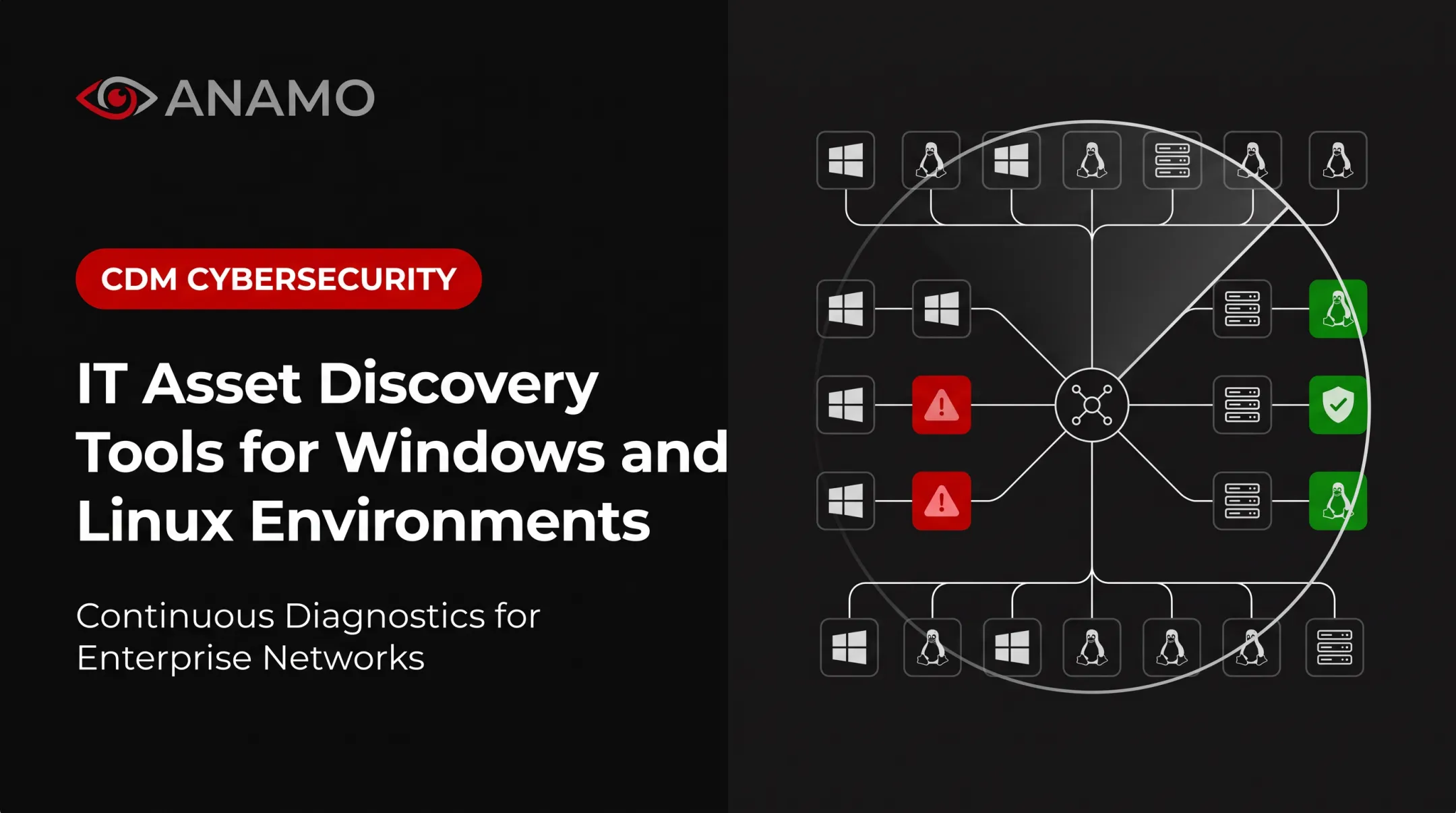
Ask whether the solution can discover and continuously monitor your actual environment, not a simplified version of it. That includes Windows and Linux workstations and servers, virtual machines, cloud workloads, remote assets, and relevant OT systems.
Push vendors on specifics:
- How do they identify unmanaged assets?
- Can they track software versions, open ports, permissions, CVEs, and configuration drift over time?
- What's the refresh rate for scans and inventory updates?
Measure success by asset inventory completeness, visibility across business-critical systems, and a measurable drop in unknown or unmanaged assets.
Detection, Investigation, and Response
A good platform catches both known vulnerabilities and suspicious behavior, including credential misuse, privilege escalation, and lateral movement. Evaluate alert quality, severity prioritization, forensic depth, and how well the platform integrates with your existing SOC, SIEM, or ticketing systems.
Dwell time is the metric that matters most here. Global median dwell time, the number of days an attacker sits undetected in a network, dropped to 11 days in 2024 from 205 days a decade earlier, according to Mandiant's threat research. Internally detected intrusions had an even shorter 9-day median.
That progress isn't universal. A CISA red-team assessment at a large critical-infrastructure organization in 2022 found that despite a mature security posture, the target failed to detect red-team lateral movement, persistence, and command-and-control activity throughout the entire engagement.
CISA's recommendation: tune host detection and strengthen identity and access management, not just network traffic monitoring.
Integration, Architecture, and Scalability
Confirm compatibility with what you already run: identity providers, endpoint tools, SIEM platforms, ticketing systems, and cloud environments. Review available APIs, connectors, deployment models, and agent or sensor overhead.
Scalability questions worth asking:
- Can it add new users, sites, or business units without creating separate monitoring silos?
- Does it handle mixed operating systems natively, or require different tools per OS?
- What happens during an acquisition, when you suddenly inherit an unfamiliar environment?
Anamo runs as a lightweight agent across Linux, Windows, workstations, servers, and virtual machines, with support for AWS, Azure, and Google Cloud. That model helps avoid the silo problem that comes from running separate tools per platform.
Compliance, Governance, and Reporting
Determine whether the platform maps findings to your required controls, policies, and risk register. NIST SP 800-53 provides a customizable control catalog, and NIST SP 800-171 Rev. 3 governs protection of controlled unclassified information for federal contractors.
CMMC currently keeps NIST SP 800-171 Rev. 2 as its Level 2 procurement baseline while Phase 2 remains suspended. DFARS safeguarding and incident-reporting obligations stay in effect regardless.
For reporting, evaluate:
- Dashboards and granular reports for both technical and executive audiences
- Alert notifications and historical records
- Role-based access and data retention policies
- Export functions with audit trails
Always ask vendors to distinguish automated evidence collection from advisory or certification services, and verify any framework mapping against the official standard yourself.
Usability, Automation, and Operational Ownership
How much specialist expertise does deployment and ongoing tuning require? This matters most for organizations with limited internal security staffing.
Look for:
- Automated collection and prioritization that reduces manual data entry
- Workflow assignment and notification controls that don't bury teams in false positives
- Clear division of responsibility between internal IT, a managed provider, and the vendor's support team
Ask about support hours, escalation procedures, onboarding time, and what happens during an active incident.
Total Cost of Ownership and Proof of Concept
Subscription price is just the starting point. Factor in implementation, integrations, agents or sensors, storage, training, managed services, and renewal terms.
Before signing anything, run a structured proof of concept:
- Select representative Windows and Linux systems, including virtual machines and sensitive permission sets.
- Test real vulnerability scenarios and reporting requirements against existing workflows.
- Score each vendor against weighted criteria tied to your actual business priorities.
- Document limitations and exclusions in writing.
- Check customer references or independent evaluations before committing.

How Anamo Can Help
Anamo is an autonomous Continuous Diagnostics and Mitigation (CDM) platform built for organizations that need continuous risk visibility, vulnerability assessment, adversary detection, forensics, zero trust administration, and compliance reporting in one interface.
The platform supports Windows, Linux, workstations, servers, virtual machines, and IT/OT environments, so it fits enterprises and critical-infrastructure operators with mixed technology estates. Anamo has reportedly been deployed by over 100 federal agencies and organizations. Confirm technical scope and deployment requirements against your environment during evaluation.
Capabilities worth evaluating during your own proof of concept include:
- Real-time risk monitoring across users, ports, permissions, and CVEs
- Automated vulnerability detection with remediation support
- Permission forensics and technical-adversary identification aimed at reducing dwell time
- Active dashboards and granular, on-demand reporting
- Multi-tenancy support for MSSPs and distributed organizations
- Autonomous data collection that doesn't require manual entry per asset
Anamo also includes an Inside Threat module for tracking nuanced permission changes and a Zero Trust Administration component for validating ZTA programs against operational evidence.
Compliance mapping covers CMMC, NIST 800-series, HIPAA, and SOX-related control areas.
None of this makes Anamo an automatic fit for every enterprise. Include it in a structured proof of concept alongside other shortlisted platforms, and validate coverage, integrations, compliance mappings, and total cost against your own environment before deciding.
Conclusion
The right cybersecurity solution is the one that closes your organization's most important visibility and response gaps while fitting your architecture, compliance responsibilities, staffing model, and budget. It's rarely the platform with the longest feature list or the biggest brand name.
Prioritize these factors over marketing claims:
- Validated coverage across your real environment
- Real integration with existing tools and workflows
- Usable reporting your teams will actually use
- Sensible automation that reduces noise, not judgment
- Measurable risk reduction you can track over time
Security selection isn't a one-time decision, either. Review coverage, vulnerabilities, incident performance, and business changes regularly, then adjust your program as the enterprise evolves.
Frequently Asked Questions
What are the top cybersecurity solutions?
Top categories include vulnerability management, endpoint detection and response, identity and access management, network security, SIEM/XDR, data protection, and continuous monitoring. The right combination depends entirely on your environment, risk profile, and compliance obligations.
What are the big 4 in cyber security?
"Big 4" usually means Deloitte, EY, KPMG, and PwC in professional services. NIST CSF 2.0 defines six functions (Govern, Identify, Protect, Detect, Respond, Recover), not four. Define your scope before comparing vendors or frameworks.
What is a network security company?
A network security company provides products or services that protect network traffic, devices, access points, and connected systems, often including firewalls, intrusion detection, and segmentation capabilities. Specific vendor fit depends on your infrastructure and threat model.
Is network security still in demand?
Yes. The US Bureau of Labor Statistics projects information security analyst employment to grow 21% from 2025 to 2035, with roughly 14,100 openings a year (BLS employment outlook). Cloud adoption, hybrid work, and connected IT/OT environments sustain that demand.
What are the four types of network security?
Commonly cited categories include firewalls, intrusion detection and prevention, network access control, and network segmentation. Terminology varies by vendor and framework, so treat this as a starting point rather than a fixed standard.